I. Introduction
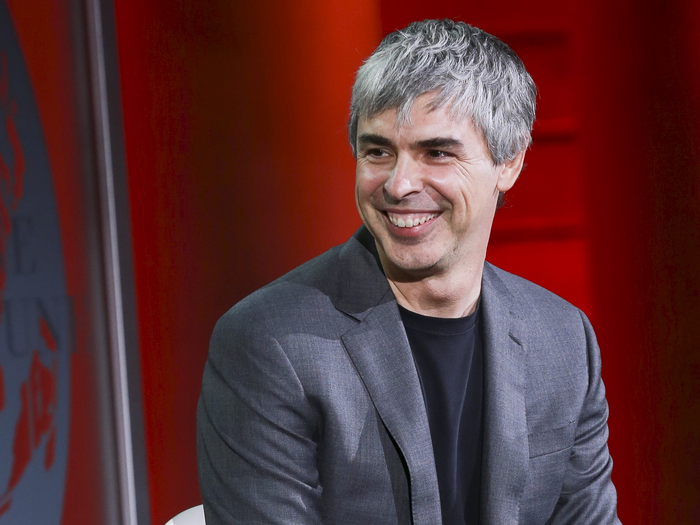
Larry Page, a name synonymous with innovation and technological prowess, is a co-founder who revolutionized the way we access and interact with information. Born on March 26, 1973, in East Lansing, Michigan, Lawrence Edward Page grew up to become one of the most influential figures in the tech industry. This biography delves into the life and achievements of Larry Page, shedding light on his journey from a curious young boy to a visionary leader who co-founded Google, one of the world's most valuable and ubiquitous companies.
A. Early Life and Education
Larry Page's upbringing played a significant role in shaping his character and instilling a curiosity-driven mindset. His parents, Carl and Gloria Page, were both computer science professors at Michigan State University, which exposed him to technology from a young age. The family's home was filled with computers and technical books, providing a fertile ground for young Larry's inquisitiveness.
Larry Page's educational journey began at Okemos Montessori School, where he learned to think independently and pursue his interests. He then attended East Lansing High School, where his passion for computers and technology continued to flourish. It was during this time that he joined a robotics club and discovered his love for problem-solving.
Upon graduating from high school, Page enrolled at the University of Michigan, where he pursued a Bachelor of Science in Computer Engineering. During his undergraduate years, he demonstrated his entrepreneurial spirit by building an inkjet printer made from LEGO bricks. His academic excellence earned him the honor of being named a National Merit Scholar.
After completing his undergraduate studies, Page set his sights on a more prestigious institution for his graduate education: Stanford University.
II. The Birth of Google
A. Larry Page and Sergey Brin: A Dynamic Duo
Larry Page's journey to revolutionize the internet truly began when he arrived at Stanford University for his Ph.D. program in computer science. It was here that he met Sergey Brin, a fellow graduate student, and the two formed a partnership that would change the digital landscape forever.
Page and Brin shared a passion for internet search and recognized its limitations at the time. Existing search engines primarily ranked pages based on the number of times a keyword appeared, which often resulted in low-quality search results. This realization sparked their ambition to create a more effective and efficient search engine.
B. The Stanford Connection
Larry Page's pursuit of a Ph.D. at Stanford not only led him to meet Sergey Brin but also laid the foundation for their groundbreaking search engine project. Their collaboration began in 1996 when Page explored the mathematical properties of the World Wide Web's link structure as part of his Ph.D. research.
Page's work laid the groundwork for what would later become the PageRank algorithm, a key innovation in Google's success. This algorithm assessed the importance of web pages by analyzing the number and quality of links pointing to them. It was a revolutionary approach to ranking web pages, as it placed an emphasis on the web's collective wisdom, rather than just keyword frequency.
III. The Google Revolution
A. PageRank: The Game-Changer
The development of PageRank was a pivotal moment in Larry Page's life and the history of the internet. It gave birth to Google's core technology, which could provide users with more relevant and accurate search results. PageRank's effectiveness in ranking web pages quickly set Google apart from other search engines.
In 1997, Page and Brin officially launched their search engine, which they initially called "Backrub." However, they soon changed the name to "Google," a play on the word "googol," a mathematical term representing the number 1 followed by 100 zeros. This name reflected their mission to organize the vast amount of information on the internet.
B. Google's Rapid Growth
Google's innovative approach to search quickly gained popularity among users seeking more precise and valuable results. The company's growth was exponential, and it soon outgrew its initial space in a Stanford dorm room. Larry Page and Sergey Brin moved their operations to a garage in Menlo Park, California, which later became iconic as the "Google Garage."
The year 1998 marked a significant milestone for Google as it received its first investment of $100,000 from Andy Bechtolsheim, co-founder of Sun Microsystems. This allowed Page and Brin to set up their first office space and start building a team of engineers and computer scientists.
Google's commitment to delivering the best search experience led to continuous innovations and improvements. They introduced features like AdWords, an advertising platform that provided highly targeted ads based on user searches, and AdSense, which allowed website owners to earn revenue by displaying Google ads.
C. The Road to IPO
Google's rapid growth attracted the attention of venture capitalists and investors. In 2004, the company filed for an initial public offering (IPO), a move that would transform Larry Page and Sergey Brin into billionaires and make Google a publicly traded company.
The IPO took place on August 19, 2004, and Google's shares were offered at $85 each. It was a resounding success, raising $1.67 billion and valuing the company at over $23 billion. Larry Page and Sergey Brin's net worth skyrocketed, and they became household names in the tech industry.
IV. Google's Evolving Leadership
A. Larry Page as CEO
Larry Page served as Google's CEO from its inception until 2001 when Eric Schmidt was brought in to provide more experienced leadership. During his time as CEO, Page focused on product development and innovation. He was known for his visionary thinking and ambitious projects.
Under Page's leadership, Google expanded its product offerings beyond search, venturing into areas such as Google Maps, Google Earth, Google News, and Gmail. The company also acquired several other companies, including YouTube in 2006 and Android Inc. in 2005.
Page's emphasis on user experience and innovation was evident in Google's commitment to creating products that improved people's lives. This approach not only solidified Google's dominance in the search engine market but also positioned it as a tech giant with a diverse portfolio of products and services.
B. The Alphabet Inc. Restructuring
In August 2015, Larry Page and Sergey Brin announced a significant restructuring of Google's corporate structure. They created a new parent company called Alphabet Inc., with Google as its subsidiary. This restructuring aimed to separate Google's core internet-related businesses from its more experimental and ambitious projects.
As part of the reorganization, Page stepped down as CEO of Google and became the CEO of Alphabet Inc., while Sundar Pichai was appointed as Google's CEO. This transition allowed Page to focus on the broader scope of Alphabet's ventures, which included projects like Waymo (self-driving cars), Verily (life sciences), and Calico (biotechnology and
life extension).
The Alphabet structure allowed each subsidiary to operate more independently, with its own CEO and management team. This gave Larry Page the freedom to explore new frontiers and invest in projects that aligned with his long-term vision for the future.
V. Beyond Google
A. Ventures and Innovations
Larry Page's influence extended far beyond his role at Google and Alphabet. He continued to invest in innovative projects and technologies that aimed to tackle some of the world's most pressing challenges. Some of his notable ventures and initiatives include:
-
1. Waymo: Under Alphabet, Page supported the development of Waymo, a subsidiary focused on autonomous vehicles. Waymo's self-driving technology has the potential to reshape transportation and reduce traffic accidents.
-
2. Verily Life Sciences: Page backed Verily, formerly known as Google Life Sciences, in its mission to leverage technology and data to improve healthcare and medical research.
-
3. Calico: Calico, short for California Life Company, was another Alphabet subsidiary dedicated to combating aging and age-related diseases. Page's interest in life extension and biotechnology led to his involvement in this project.
-
4. Flying Car Projects: Page invested in flying car startups, such as Kitty Hawk and Opener, with the goal of advancing personal aviation and urban mobility.
B. Personal Life and Philanthropy
Despite his immense success in the tech industry, Larry Page maintained a relatively private personal life. He married Lucinda Southworth in 2007, and the couple has two children. Page's love for adventure and exploration extended to his personal life, and he was known for pursuing interests like kiteboarding and eco-friendly housing solutions.
Page and his wife have also been active philanthropists. They established the Carl Victor Page Memorial Foundation in honor of Larry Page's father, which supports educational, environmental, and healthcare causes. Additionally, Page has supported initiatives related to clean energy and sustainability, reflecting his concern for the planet's future.
VI. Conclusion
Larry Page's journey from a young boy fascinated with technology to a co-founder of Google and CEO of Alphabet Inc. is a testament to the power of innovation, vision, and relentless pursuit of excellence. His contributions to the tech industry have not only shaped the way we access information but have also expanded the horizons of what technology can achieve.
Page's leadership at Google and Alphabet has left an indelible mark on the world, influencing everything from how we search for information to the development of autonomous vehicles. His commitment to tackling ambitious projects and investing in groundbreaking technologies has positioned him as a true visionary in the world of technology and innovation.
As Larry Page continues to explore new frontiers and support projects that have the potential to change the world, his legacy as a pioneer and innovator remains firmly cemented in the annals of history. His story serves as an inspiration to aspiring entrepreneurs and tech enthusiasts, reminding us that with the right combination of vision, determination, and creativity, anything is possible in the ever-evolving world of technology.